Hearing the words “slip disc” on an MRI report worries most people, and many assume an operation is the only option. In reality, most disc problems improve without surgery when treatment is started early and followed properly.
What is a slipped disc?
Between the bones of the spine are soft cushions called discs. Each disc has a tough outer ring and a soft centre. With age, strain or injury, the outer ring can weaken and the centre bulges out. This is called a disc bulge, protrusion or herniation. If it presses on a nerve, it causes pain that travels into the leg (sciatica) or arm (from the neck).
Reading your MRI
- Disc bulge: a mild, broad bulge. Very common, even in people without pain.
- Protrusion: a more focal bulge that may touch a nerve root.
- Extrusion or sequestration: disc material has pushed further out. Can cause more severe symptoms, though many still improve with time.
The size on the MRI does not always match the pain. Your symptoms and examination matter as much as the report.
When Ayurvedic care helps
Non-surgical treatment is usually tried first when:
- Pain is the main problem, without serious weakness
- Bladder and bowel control are normal
- Symptoms are improving or stable
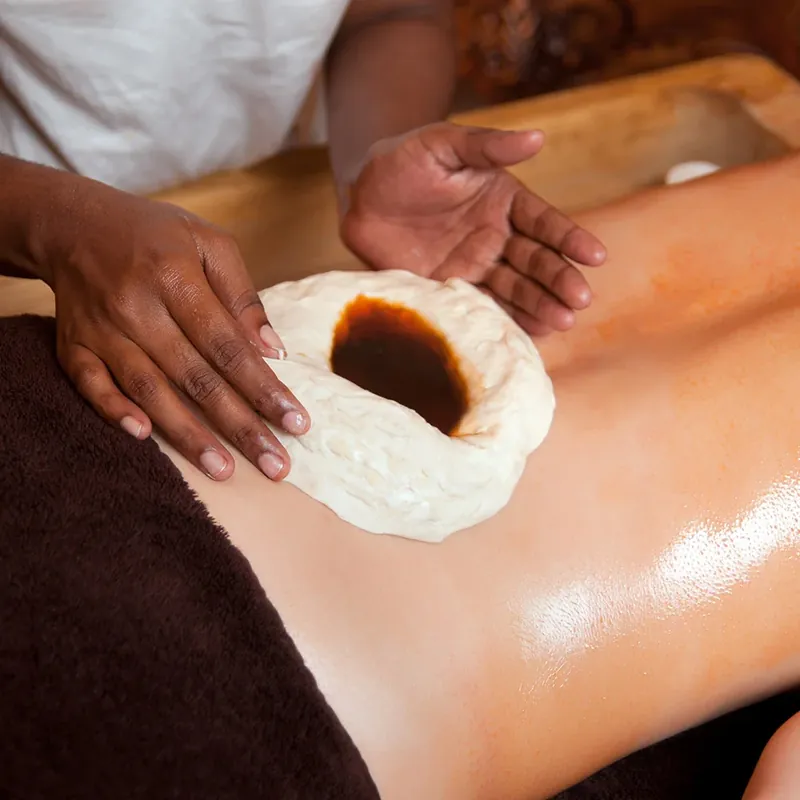
At Keshavbaug, treatment combines Kati Basti or Greeva Basti, heat therapies, Agnikarma for focused pain, a course of Basti for Vata, internal medicines, and posture and core exercises.
When surgery may be needed
See a spine surgeon urgently if you have:
- Loss of bladder or bowel control
- Numbness around the private parts or inner thighs
- Rapidly increasing weakness, such as foot drop
- Severe pain that does not improve at all after several weeks of proper treatment
We tell patients honestly when their examination or MRI suggests surgery.
Recovery and prevention
- Avoid lifting, forward bending and long sitting during the painful phase
- Increase walking slowly
- Start core exercises after the pain settles
- Keep a healthy weight
- Use a chair with back support and keep screens at eye level

Written by the doctors of KeshavbaugThis article is for general information and is not a substitute for a consultation. Please see a doctor before starting any treatment.