Brain & nerves
Migraine & chronic headache
Care for repeated headaches and migraine that aims to reduce how often attacks come and how strong they are.
- NABH-accredited
- Cashless insurance
- Doctor-led care
About migraine & chronic headache
Migraine is a repeated headache, often on one side, that can come with nausea, vomiting or sensitivity to light and sound. Attacks are usually set off by triggers such as skipped meals, poor sleep, sun exposure or stress. Treatment aims to reduce how often attacks come, how strong they are, and how much painkiller you need.
Common causes
- Skipping meals or long gaps between meals
- Too little or irregular sleep
- Sun and heat exposure
- Stress, anxiety and long screen time
- Acidity and constipation
- Hormonal changes around periods
Common symptoms
- One-sided throbbing headache
- Headache with nausea or sensitivity to light
- Headaches triggered by sun, fasting, stress or poor sleep
- Frequent dependence on painkillers
Reports and tests that help
- Blood pressure check
- Eye check-up if headaches come with eye strain
- MRI only if the doctor finds warning signs
Bring any reports you already have. The doctor will advise if anything more is needed.
How we treat it at Keshavbaug
We look at the pattern of attacks, digestion, sleep and triggers. Nasya and Shirodhara are the main therapies, supported by internal medicines and changes to meal timing and sleep. A headache diary helps us adjust the plan.
Headache history
We note when attacks come, how long they last and what sets them off, and give you a simple headache diary.
Nasya and Shirodhara
A course of Nasya clears and nourishes the head; Shirodhara calms the nervous system and improves sleep.
Medicines and digestion
Medicines balance Pitta and Vata, and acidity or constipation is treated at the same time.
Routine and follow-up
Fixed meal and sleep times, with review of your diary after a few weeks.
Usual courseA 7 to 14 day therapy course, with medicines continued for a few weeks after.
Therapies that may be used
-
Nasya नस्य
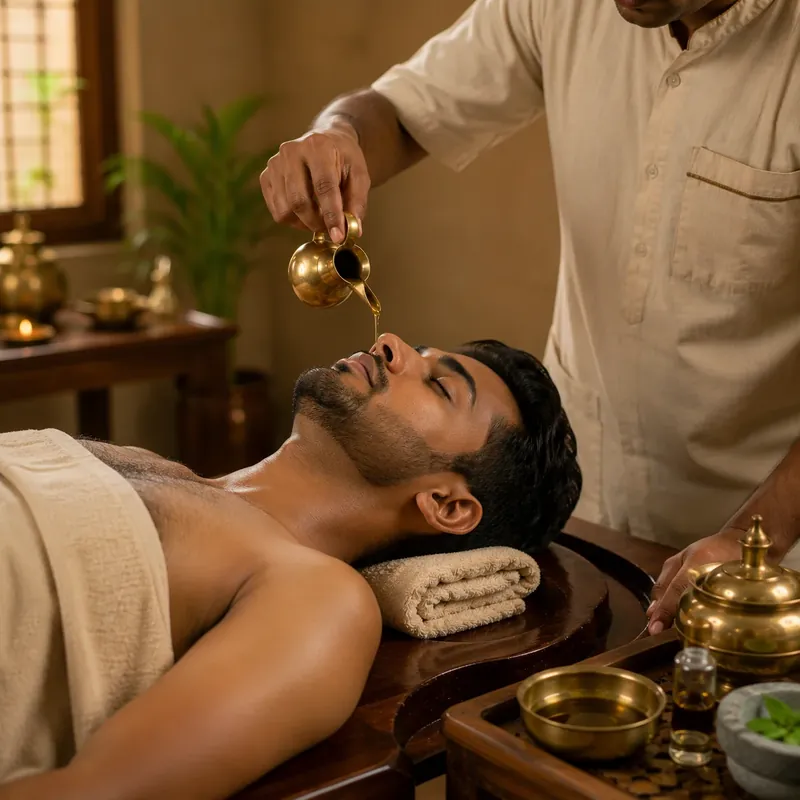
Medicated oil drops in the nostrils after a face massage and steam. Used for migraine, sinus problems, facial palsy, neck stiffness and hair fall.
-
 Shirodhara शिरोधारा
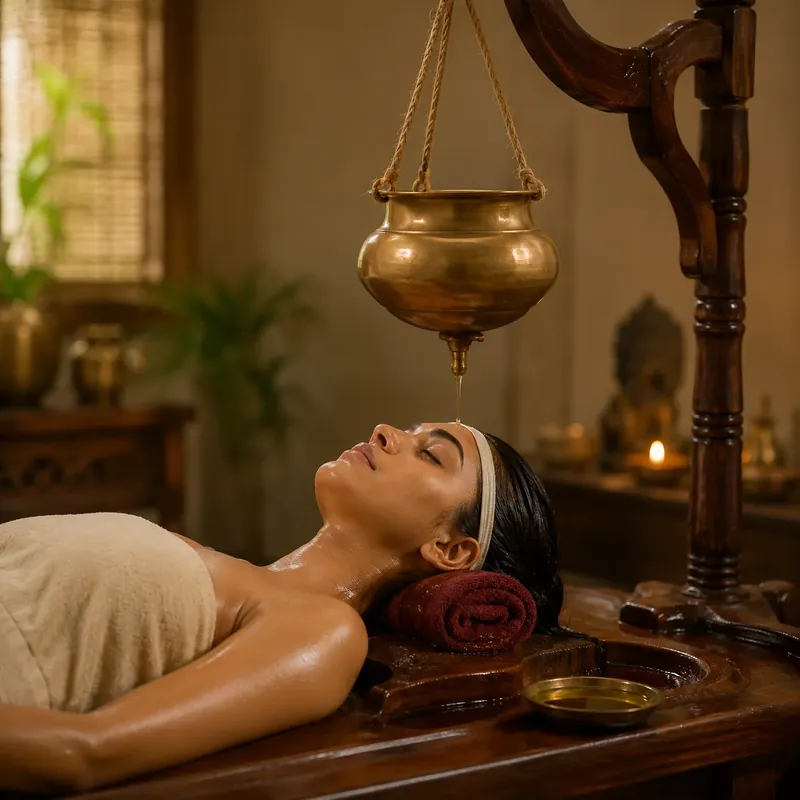
A slow, steady stream of warm oil, buttermilk or herbal decoction poured over the forehead. Deeply calming; used for poor sleep, stress, migraine and high blood pressure support.
-
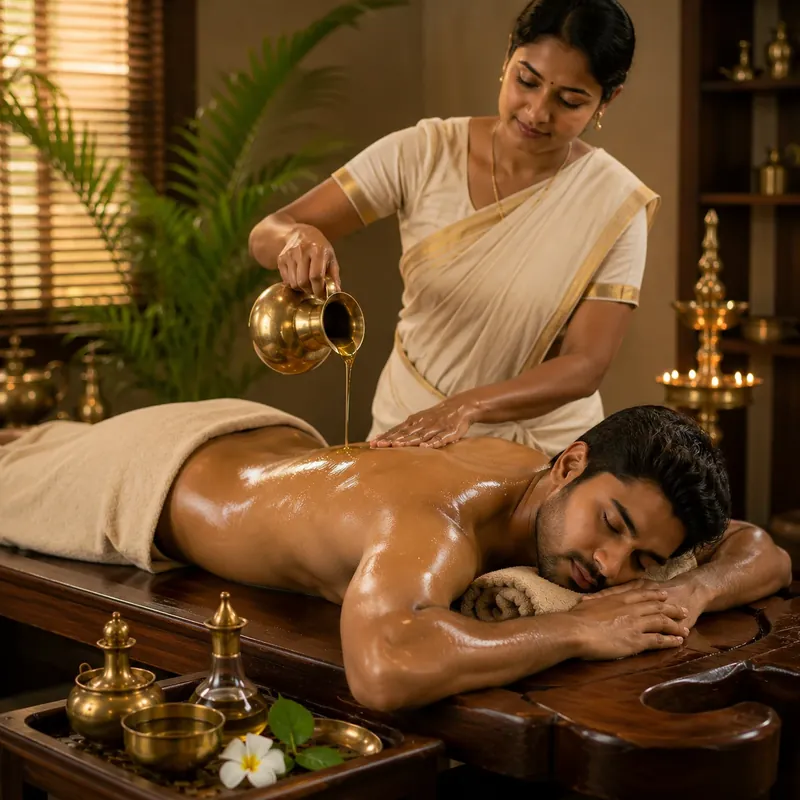 Abhyanga अभ्यंग
A full-body massage with warm medicated oil chosen for your condition. It loosens stiffness, improves circulation and prepares the body for other Panchakarma steps.
The final plan is decided by the doctor after examining you.
Diet guide
Helpful
- Meals at fixed times, never skipped
- Rice, moong dal, cooked vegetables
- Coconut water and buttermilk in summer
- Sweet seasonal fruits
- A spoon of ghee with meals
Best avoided
- Fasting or very late meals
- Too much tea or coffee
- Very spicy, sour and fermented food
- Alcohol
- Late nights and long screen sessions
This is a general guide. Your doctor will give you a diet plan for your body type and condition.
Daily habits that help
- Sleep and wake at the same time daily
- Take a short break from screens every 30 to 40 minutes
- Wear sunglasses and a cap in strong sun
- Practise Anulom Vilom and Sheetali pranayama
- Drink enough water
When to see a doctor urgentlySee a doctor urgently for a sudden "worst ever" headache, headache with fever and stiff neck, or headache after a head injury.
Questions patients ask
Can I stop my migraine tablets?
Do not stop any prescribed medicine on your own. As attacks reduce, the doctor will guide you on tapering together with your physician.
Is Nasya painful?
No. A few warm medicated drops are put in each nostril after a face massage and steam. Some people feel a mild tingling for a few minutes.
Book an appointment
Send your details and our team will call you to confirm the time.
Visit the hospital
- Keshavbaug Ayurvedic Neuro Hospital and Research CentreRail Toli, beside Rashtravadi Congress Bhavan, Pal Chowk, Gondia, Maharashtra 441614Get directions
- Phone+91 9673712818, +91 9370118498
- WhatsAppSend a message
- Emailkeshavbagayurvedic@gmail.com
- OPD timings
9.00 AM TO 6.00 PM
This is not an emergency hospital. For stroke signs, chest pain or a serious injury, call 108.