
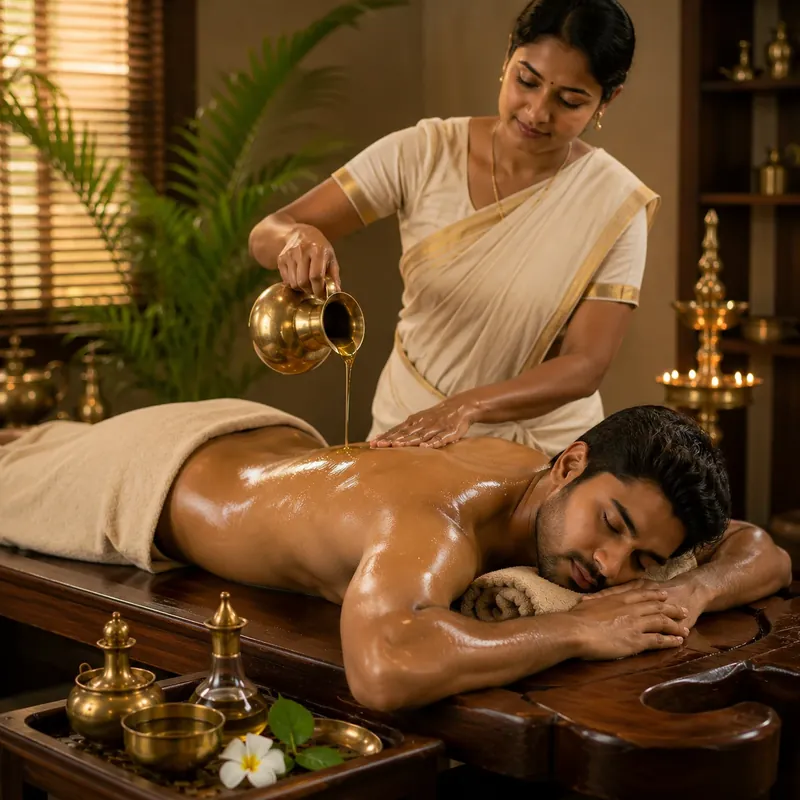
Pain on climbing stairs, stiffness after sitting, and a cracking sound in the knee are common signs of osteoarthritis. It is one of the main reasons older adults lose their independence, yet much can be done to keep knees working well.
What is osteoarthritis?
The ends of the bones in the knee are covered with smooth cartilage that acts as a cushion. In osteoarthritis this cartilage slowly wears and becomes rough. The joint space narrows, small bony growths form, and the joint becomes painful and stiff.
Risk factors
- Age above 45
- Overweight
- Old knee injury
- Weak thigh muscles
- Frequent squatting and stair climbing
- Low vitamin D
The Ayurvedic view
Ayurveda calls this Janu Sandhigata Vata: dryness and degeneration of the joint caused by aggravated Vata. Treatment aims to nourish and lubricate the joint, reduce pain and strengthen the surrounding muscles.
Treatment
- Janu Basti: warm medicated oil held over the knee in a dough ring.
- Patra Pinda Sweda: herbal heat for pain and stiffness.
- Agnikarma: for focused painful points.
- Internal medicines for the joints, prescribed after examination.
- Exercises to strengthen the thigh muscles.
In early and moderate arthritis many people get good relief. In advanced damage, Ayurveda can reduce pain but cannot rebuild the joint; your doctor will explain what to expect after seeing your X-ray.
Simple exercises (when pain allows)
- Straight leg raise: lie on your back, tighten the thigh and lift the straight leg 6 inches; hold 5 seconds.
- Static quadriceps: sit with legs straight, press the back of the knee into a rolled towel; hold 5 seconds.
- Sit to stand: rise slowly from a chair without using your hands.
Do 10 repetitions, twice a day. Stop if pain increases sharply.
Daily habits
- Use a western toilet and a chair while your knees hurt
- Walk on flat ground in cushioned footwear
- Reduce weight if you are overweight; every kilogram lost reduces load on the knees
- Avoid long standing and frequent stairs
- Include sesame seeds, milk, green leafy vegetables and turmeric in your diet

Written by the doctors of KeshavbaugThis article is for general information and is not a substitute for a consultation. Please see a doctor before starting any treatment.