
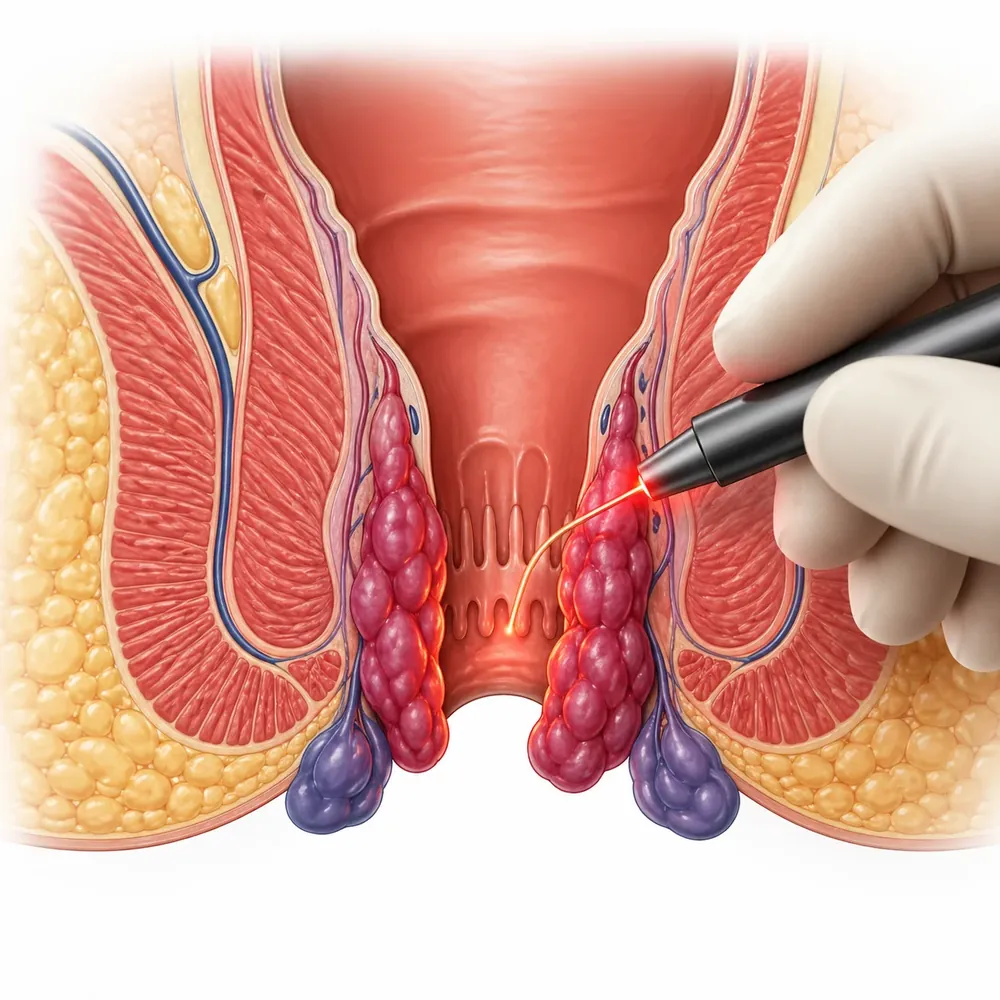
Problems in the anal area are very common, but many people delay treatment out of embarrassment. Early care is simpler, faster and more comfortable. Here is how the three most common problems differ.
Piles (haemorrhoids)
Piles are swollen veins inside or around the anus. They often cause painless bright red bleeding during motion, a feeling of heaviness, or a lump that comes out and may go back on its own. Piles are graded from 1 (inside only) to 4 (outside and cannot be pushed back).
Fissure
A fissure is a small tear in the skin of the anus, usually from passing hard stool. It causes sharp, cutting pain and burning during and after motion, sometimes with a streak of blood. Many people become afraid to pass stool, which makes constipation worse.
Fistula
A fistula is an abnormal tunnel from inside the anus to the skin outside, usually after an abscess (a painful pus-filled swelling). It causes repeated pus or discharge, itching and pain. A fistula does not heal on its own with medicines alone.
Common causes
- Long-standing constipation and straining
- Low fibre and low water intake
- Long hours of sitting
- Pregnancy
- Very spicy food (fissure)
- Infection of an anal gland (fistula)
How Ksharsutra works
Ksharsutra is a medicated thread coated with herbal alkalis, described in the Sushruta Samhita and still used today. For a fistula, the thread is placed through the tunnel. The medicine slowly cuts through and heals the tract at the same time. The thread is changed weekly until the tract heals. For piles, the thread is tied at the base of the pile mass, which then shrinks and falls off.
- Usually a day-care procedure
- Most people return to work quickly
- Low chances of the fistula coming back
Other treatment options
Early piles and most fissures settle with medicines, sitz baths, and diet changes. Advanced piles may need Ksharsutra or a laser procedure.
Prevention
- Eat plenty of fruits, vegetables and whole grains
- Drink 2.5 to 3 litres of water a day
- Do not strain or sit long on the toilet
- Take a warm sitz bath when there is discomfort
- Walk daily and avoid long sitting
When to see a doctor quickly
Heavy bleeding, black stools, a change in bowel habit with weight loss, or fever with a painful swelling near the anus need prompt examination.

Written by the doctors of KeshavbaugThis article is for general information and is not a substitute for a consultation. Please see a doctor before starting any treatment.