A stroke changes life suddenly for the patient and the whole family. After emergency treatment, the question is: how much recovery is possible, and what can we do to help? The answer differs for every person, but one thing is clear: the first few months matter most.
First, emergency care
A stroke is a medical emergency. Sudden face drooping, arm or leg weakness, or slurred speech means calling 108 or reaching the nearest emergency hospital immediately. Clot-dissolving treatment works only in the first few hours. Ayurvedic rehabilitation begins once the patient is medically stable.
Why early rehabilitation matters
After a stroke, the brain can partly reorganise itself and other areas can take over lost functions. This is most active in the early months. Regular, repeated movement and therapy during this time give the best chance of recovery.
The Ayurvedic view
Ayurveda describes one-sided paralysis as Pakshaghata, a disorder of Vata affecting the channels that carry movement and sensation. Treatment aims to calm Vata, nourish muscles and nerves, and reduce stiffness.
Therapies used
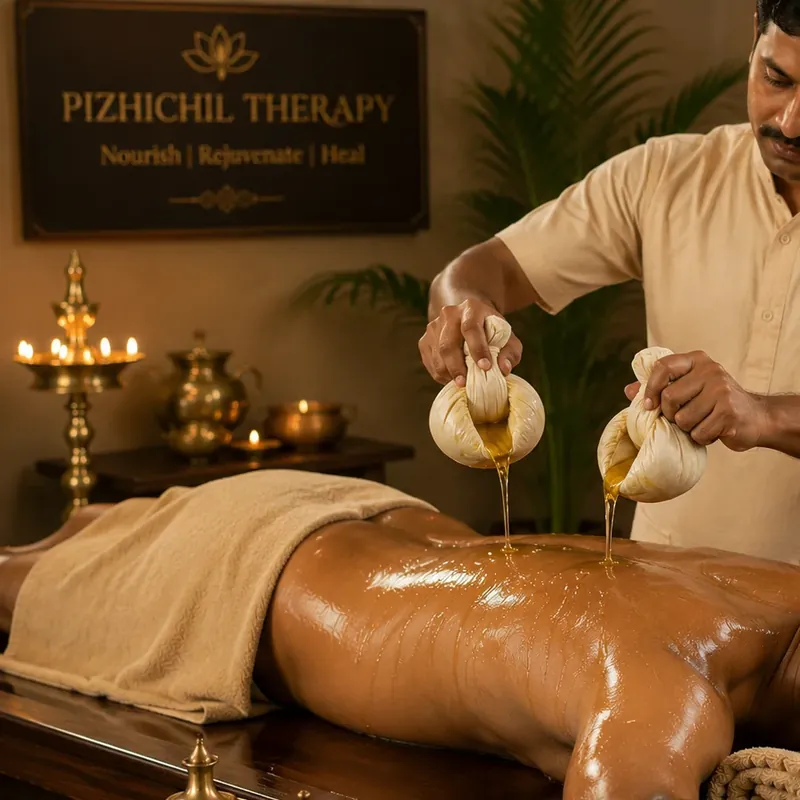
- Abhyanga and Pizhichil: warm medicated oil therapies that reduce stiffness and improve circulation.
- Patra Pinda Sweda: herbal heat for tight muscles and painful joints.
- Basti: a planned course for Vata at its root.
- Nasya: for facial weakness and speech difficulty, when suitable.
- Guided movement: exercises for the arm, leg, balance and walking.
Care at home
- Practise exercises every day, not only on therapy days
- Change position every two hours if the patient is in bed, to prevent bedsores
- Make the home safe: rails, non-slip mats, good lighting
- Encourage the patient to do daily tasks themselves as far as possible
- Talk and read aloud together to help speech
Preventing another stroke
- Take BP, sugar and cholesterol medicines exactly as prescribed
- Check BP regularly at home
- Stop smoking, tobacco and alcohol
- Reduce salt and fried food
- Stay active within your ability
Looking after the caregiver
Caring for a stroke patient is demanding. Share the work within the family, take breaks, and ask the doctor about anything that worries you.
Written by the doctors of KeshavbaugThis article is for general information and is not a substitute for a consultation. Please see a doctor before starting any treatment.